Phantasmagoria and ecology
2026
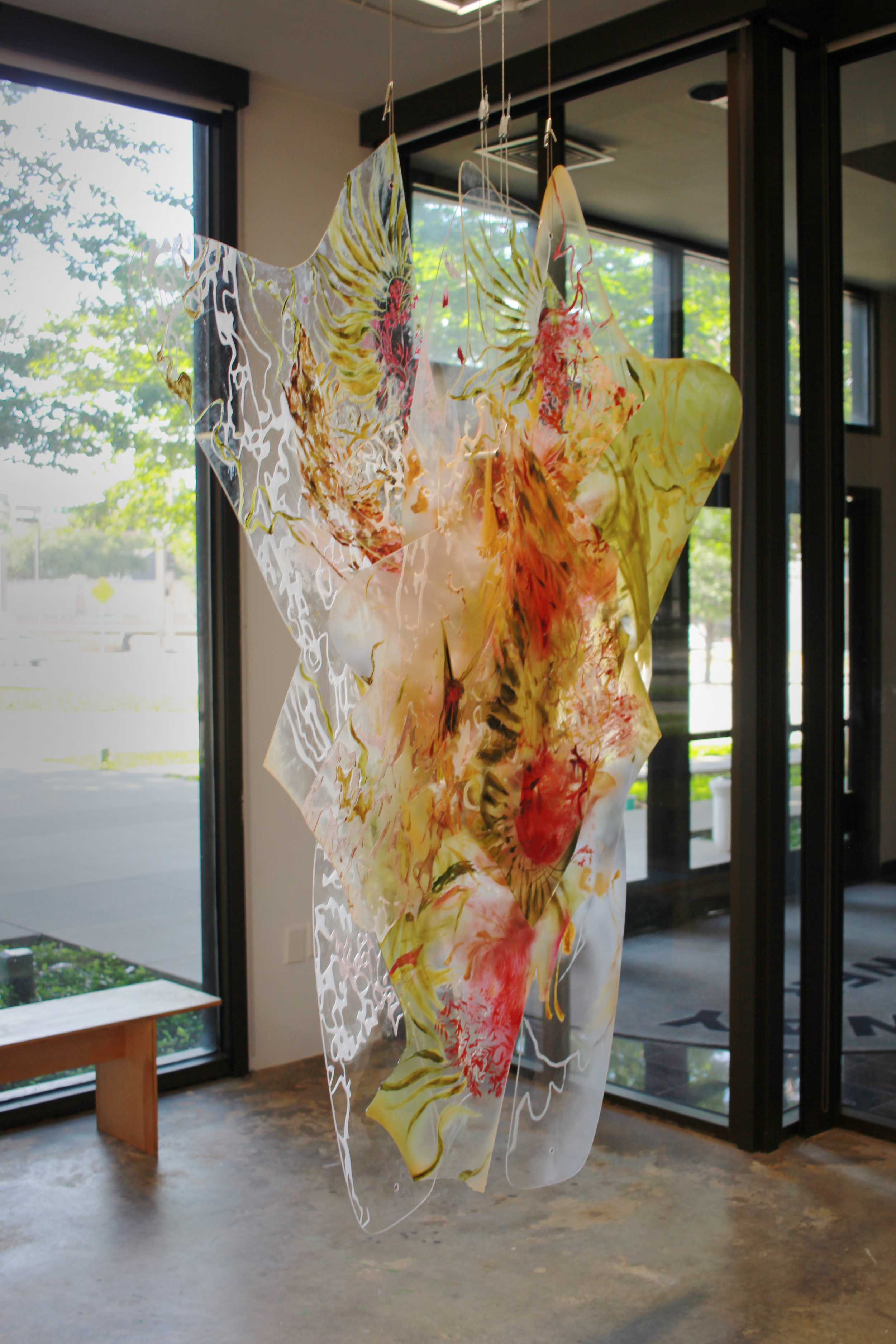
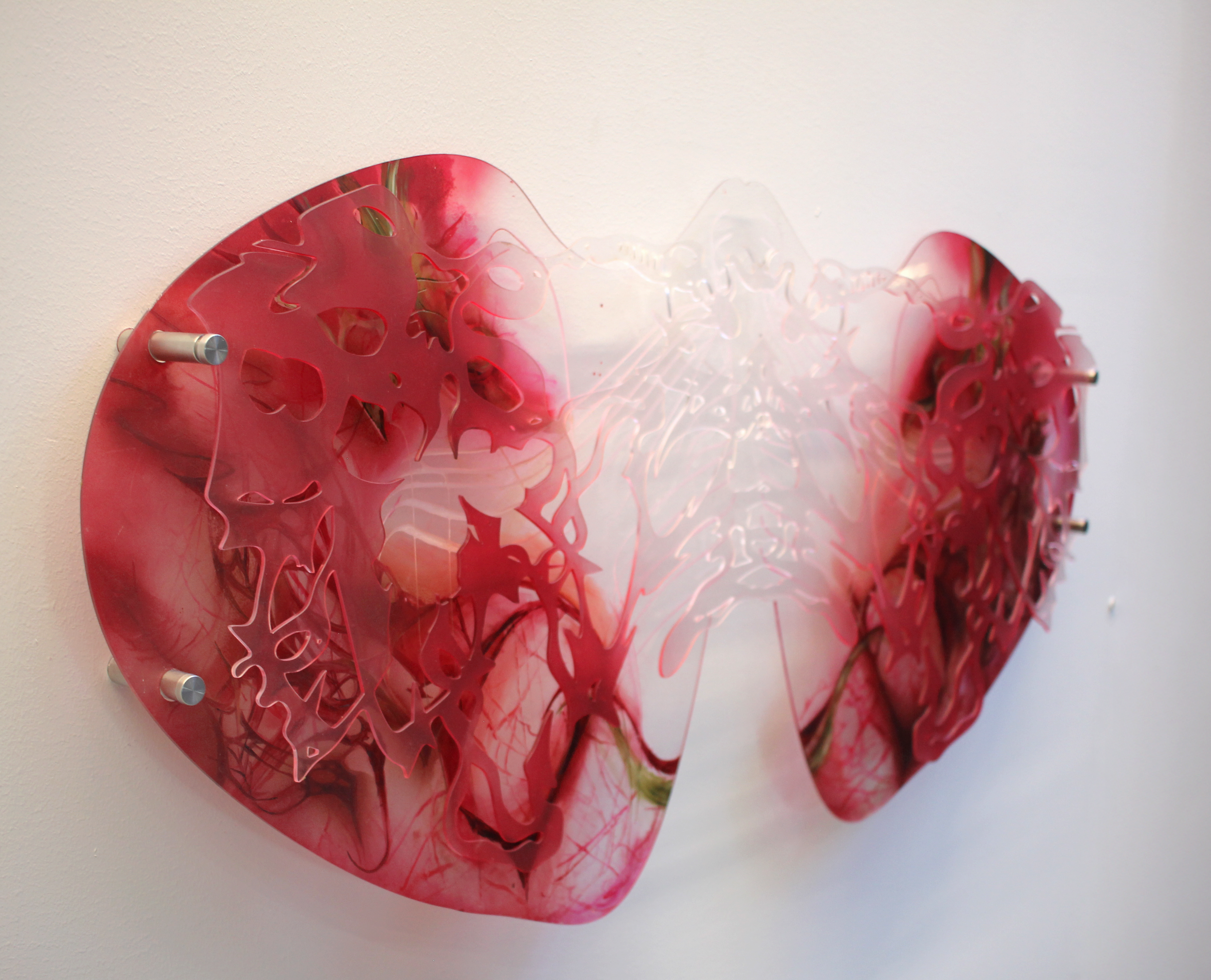
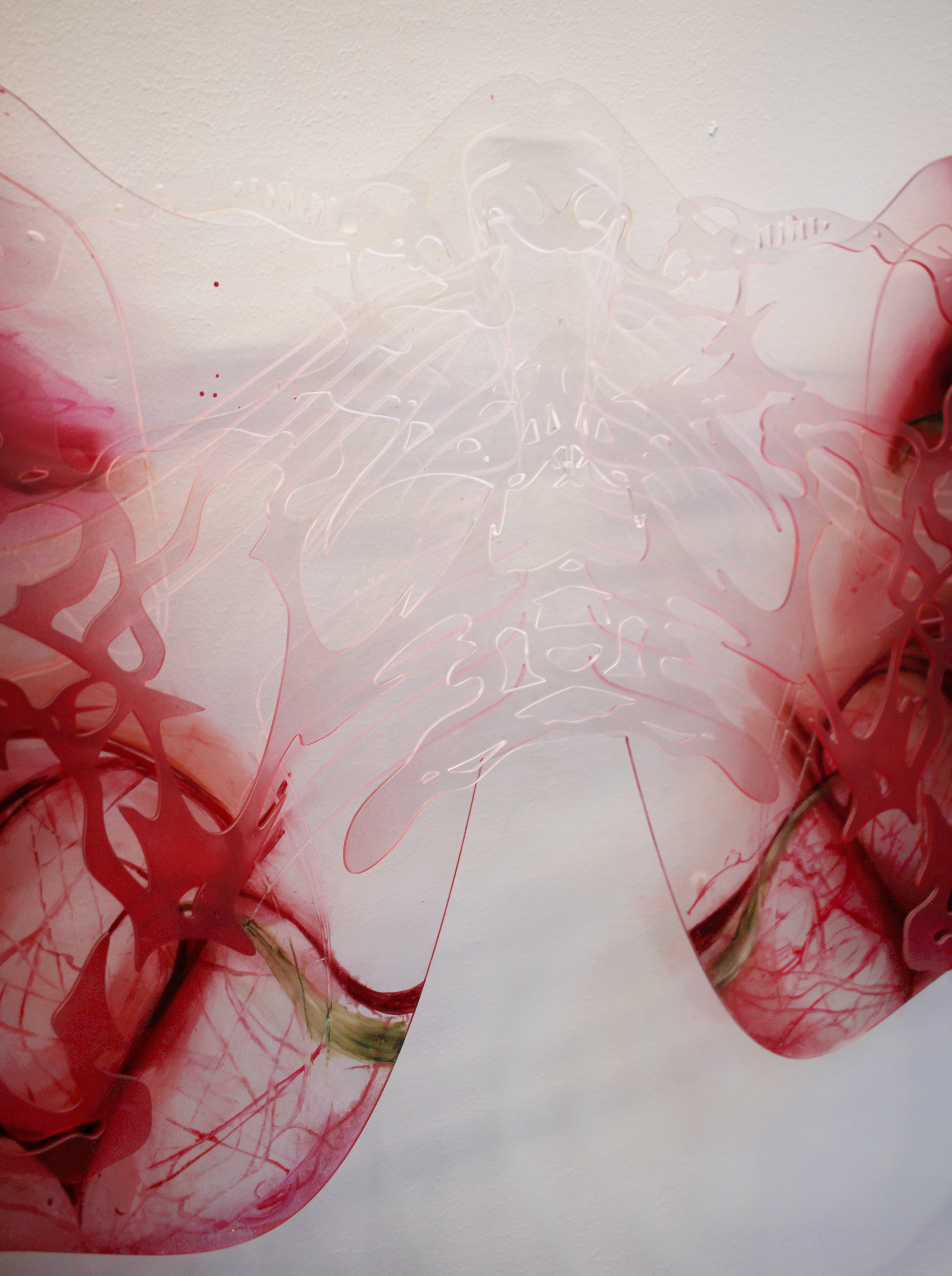
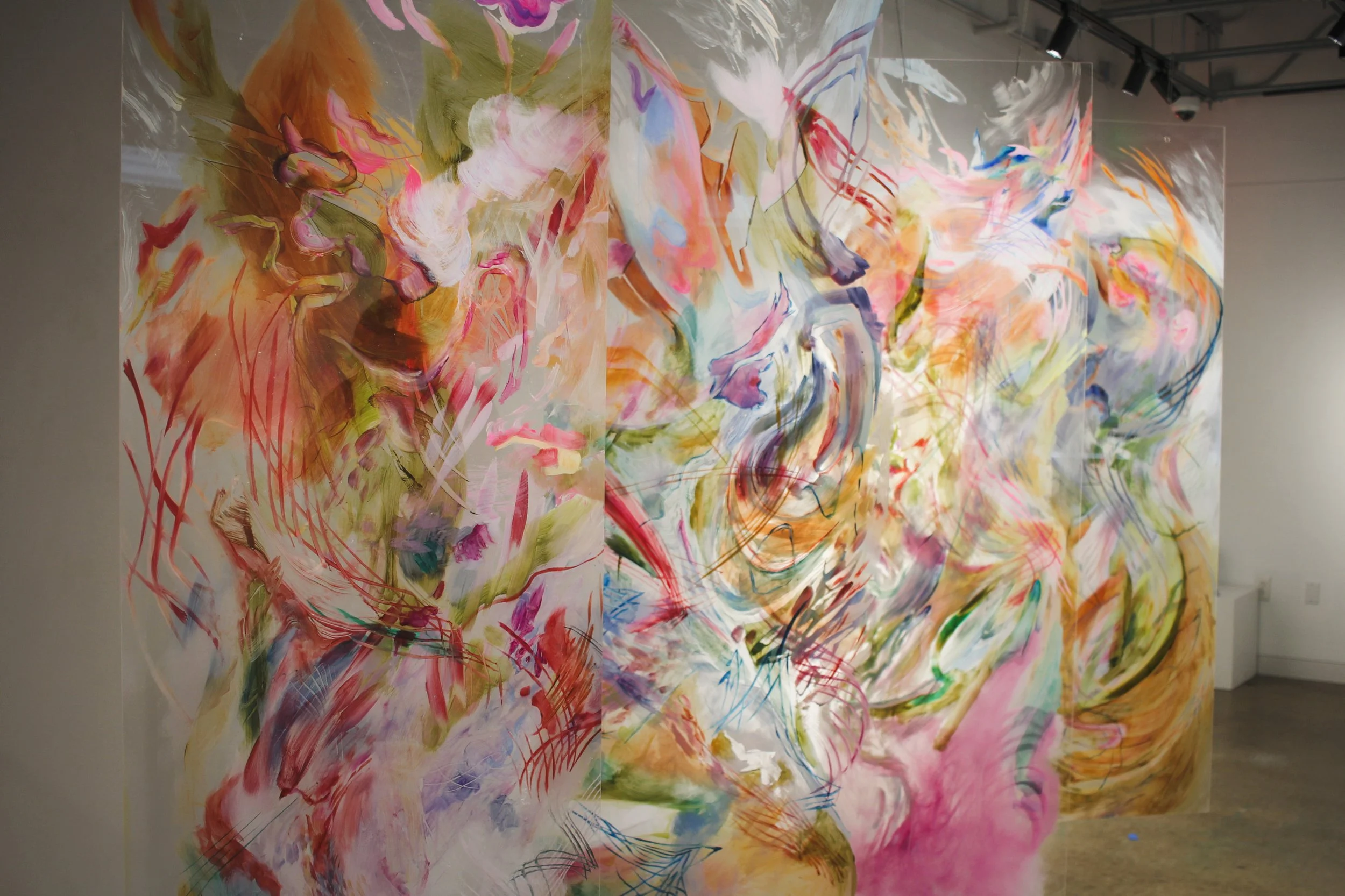
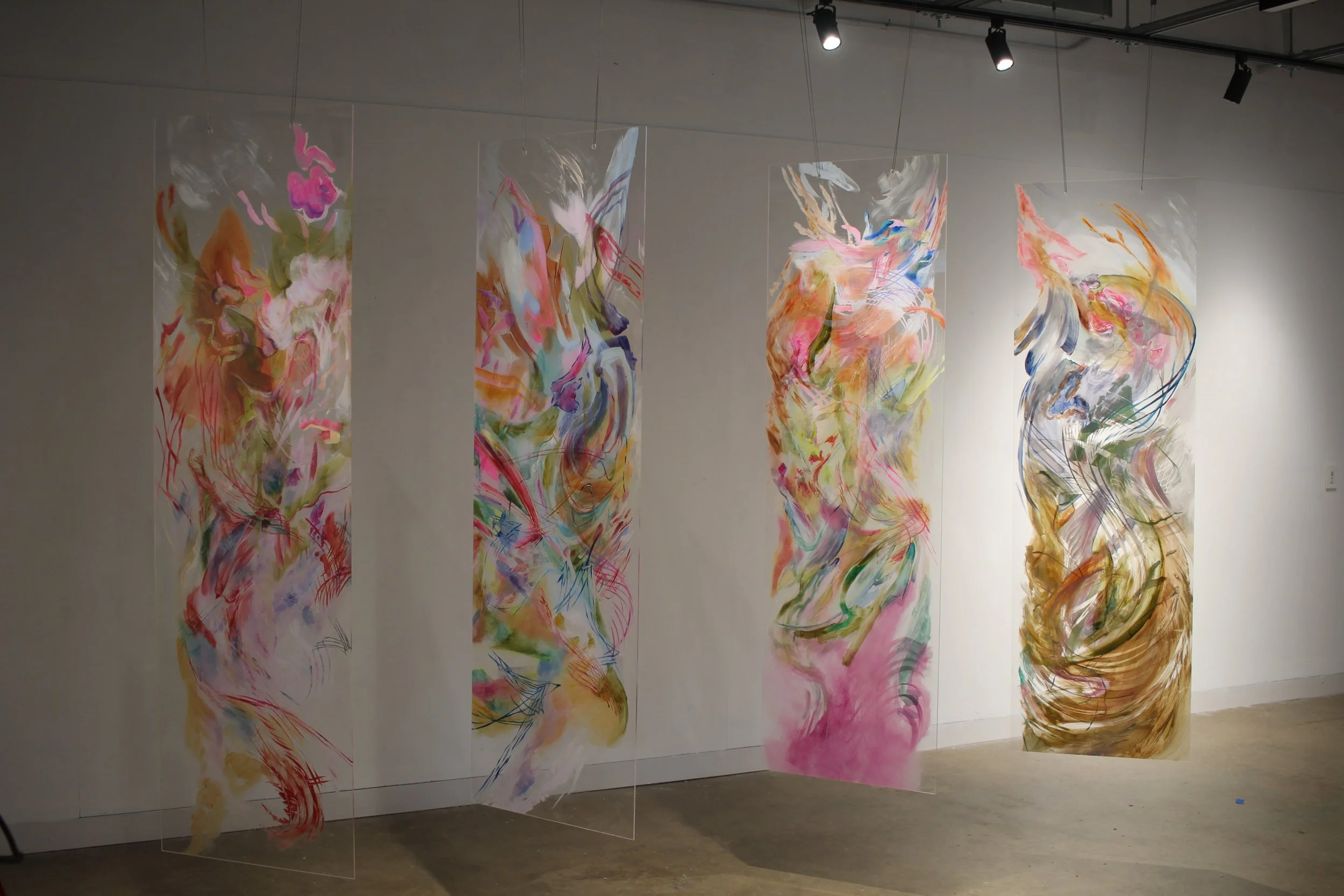
Reflexive, mutable, and phantasmagoric, Alicia Parham’s work finds its home in the liminal. Since first receiving a major health diagnosis in 2021, Parham continues to grapple with the increasingly blurred boundaries between the real and immaterial caused by pseudotumor cerebri; a condition which in of itself perpetuates this paradox with its Latin root translating to false, imitated, exaggerated, in appearance only. Drawing on an array of technical elements from abstraction and conceptualism to installation and traditional painting, Parham weaves a complex visual web that navigates the strait between what is and what could be. Her most recent body of work exemplifies the maturation of this interdisciplinary artist’s conceptual throughlines. Sophisticated and unflinching, Parham transforms the surface– and at times abandons the surface entirely – to generate a site of confluence for both material and optical experimentation. Through a dynamic interplay of texture and light, what began as an effort to transmute fear into beauty now embraces the haunting, ethereal, and all-consuming experience of seeing things that are not there, and of missing things that are. Parham’s visual revenants ask a great deal of their audience – inviting participation, interpretation, and emotional empathy. In Machinery, catharsis, technology, rag-tag (2025), thin layers of painted acrylic sheets provide a tangible, biomorphic form to data generated by the artist’s own neurofeedback program. Here, the stark, clinical process often associated with measuring medical data and statistics is counterbalanced by Parham’s attentive painterly precision as overlaying tendrils emerge, distort, and disappear in response to the viewer’s movements through space. Other counterparts to this spectral entity, such as Blood will not flow (2025), lean further into the conceptual framework of the line itself. For Parham, lines can map and measure; lines can delineate between distinct categories; lines can obfuscate; lines can serve as both anatomical and interpersonal pathways of circulation and connection; perhaps most importantly for the artist, lines can become blurred. Over the course of the last five years, Parham has seized what once refused to disappear, and transformed what once was absence into presence. Her willingness to examine and be examined, coupled with her desire for others to do the same, pushes Parham’s technical approach and visual lexicon of transformation, fluidity, and mystery. Still there remains an ever-present persistence on the incredible possibility of documentation as a generative act; a record of life unfolding even as life continues to unfold.
VERONICA MYERS they/them/theirs
Curatorial Assistant for Contemporary Art, Asian Art, and Islamic Art at
The Dallas Museum of Art


Neurofeedback & Magic
2024
As my practice has evolved, I have considered ways to investigate further how this intersection, partially neuroscience, could be present in my work. In 2023, I received the first of two grants ( the University of North Texas Project Grant 2023 & the Arch and Ann Giles Grant via the Dallas Museum of Art 2024) that would fund a bespoke EEG neurofeedback visualizer program.
This process allows me to explore the interplay between neurological phenomena and visual expression, creating something entirely new. Data from alpha, beta, delta, and theta waves can be collected, assigned a binary, and exported to the designated program utilizing Muse neurofeedback hardware and Derivative programming. In a straightforward control scheme such as “RGB,” alpha waves can be represented by red, beta waves by green, and theta waves by blue. As the frequencies of these brain waves fluctuate in real time, the screen reflects subtle color changes that correspond to brain activity.


Intravenous
2023
Playing with color, experimental practices, and visual drama are elements that have been consistent in my work from the time I started my creative practice. These pillars have evolved with me over the years, I credit this to being drawn to the pursuit of learning. Curiosity and failure are important to my creative process, as well as embracing the idea that my work is being created by an imperfect human hand.
Neurological research partially interests me as in 2021, I was diagnosed with a relatively rare neurological condition at a routine check-up. I struggled to hold on to my practice as an artist as I began to lose eyesight and experienced “floaters” which can be anything from chunks of my vision being replaced with vibrant colors to what looks like bugs crawling across my canvas. Instead of fighting these shortcomings, I embraced them and incorporated them into my paintings.
Intravenous, whose title is a nod to the venous sinus, is a major vein on both the left and right side of the brain slightly above the ear, came about when I received an intravenous implant on the left side of my brain. My hope with this collection is to highlight the unusual beauty of this experience.
In my current work, I use images that are created via touch designer which are distorted by music and then translated onto a canvas. Recently, I received a generous grant to fund my research as it continues to evolve. I have used neurofeedback as an input into a bespoke program made in collaboration with Colton Parham, my brother, and computer genius, to create dynamic compositions which I then draw inspiration from and translate onto large-scale paintings.
I believe fear is an invitation to evolve and as I faced what many artists would consider a nightmare, the only logical option for me was to find a way to make art with this. After several brain surgeries, my vision has improved, but there was some damage done that will stay with me.
IV 23’ Open November 1st-9th
The 2024 show dates coming soon!
Documentation by Hudson Ingram
Stay up to date on this collection @akeparham on Instagram!


